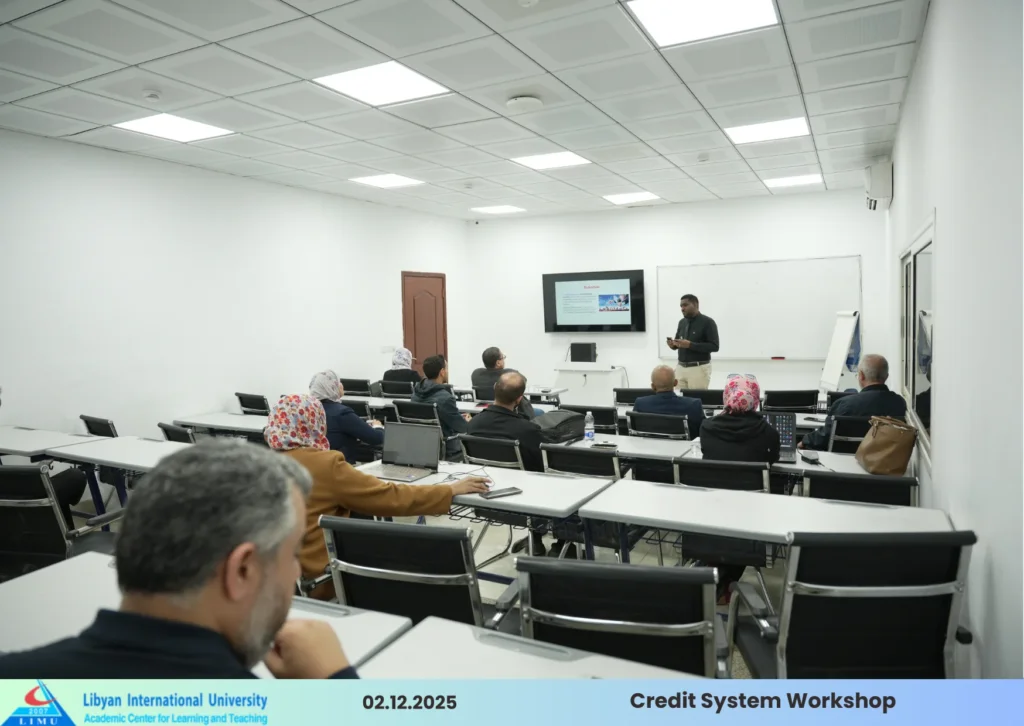
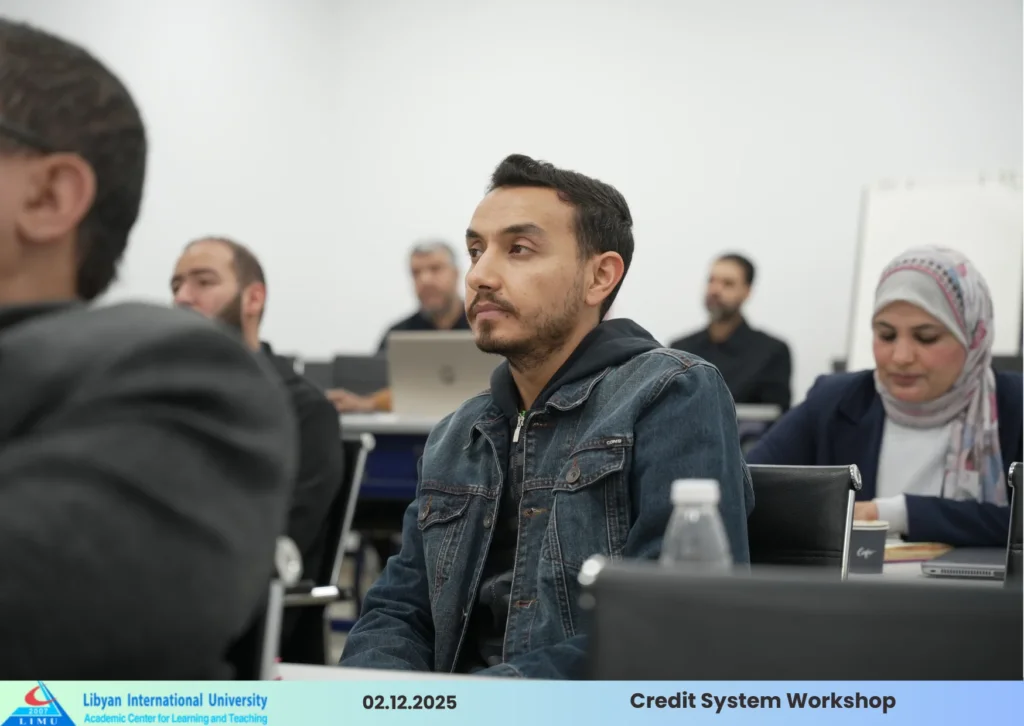
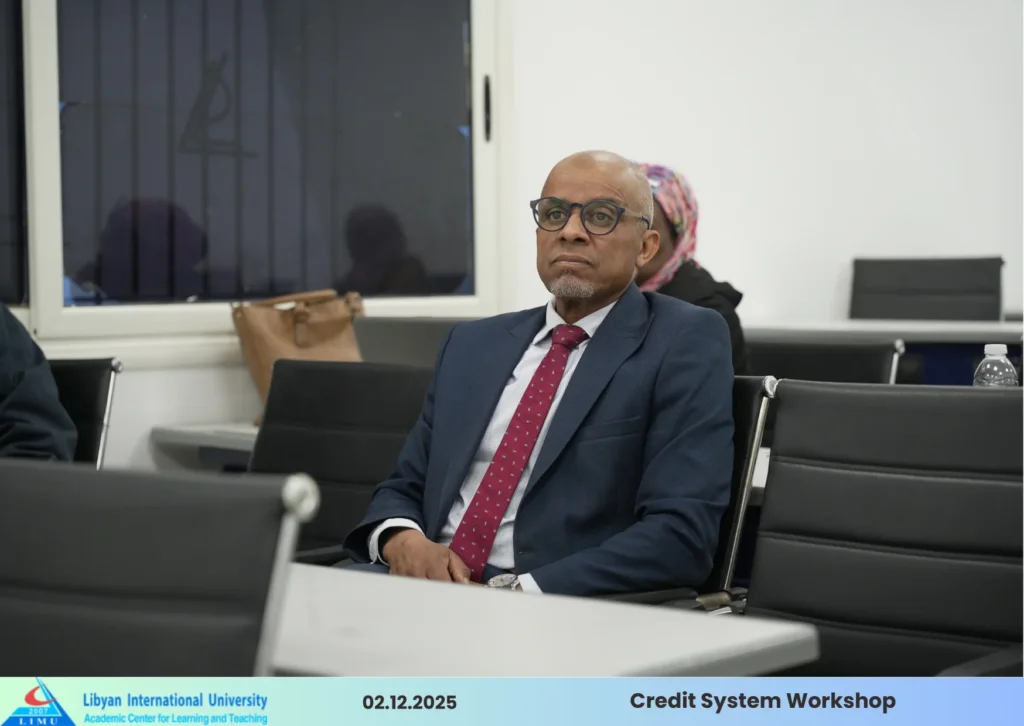
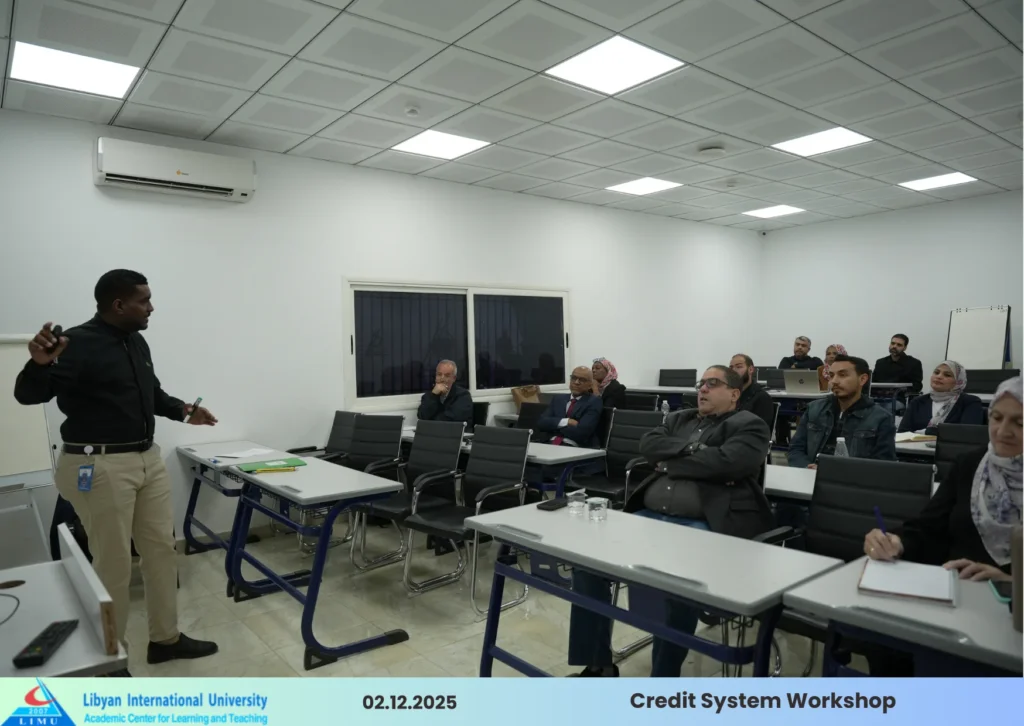
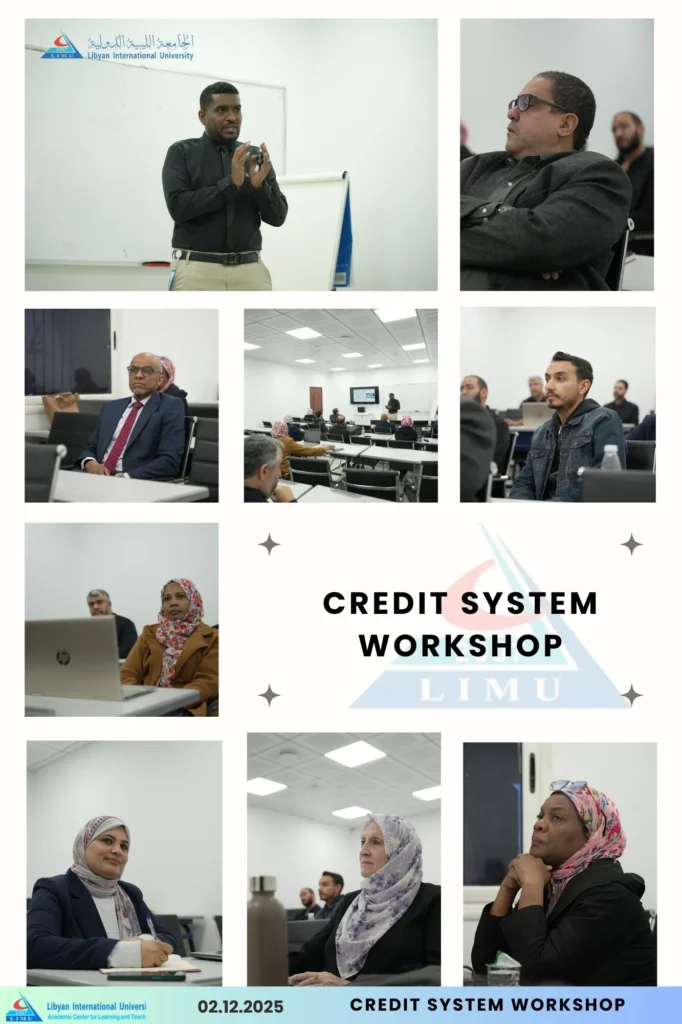
The Academic Center for Learning and Teaching (ACLT) at the Libyan International University (LIMU) organized a workshop titled “Understanding and Implementing the Credit System in Higher Education”, aimed at enhancing the knowledge and skills of faculty members and academic administrators regarding modern curriculum frameworks, on 2nd December 2025.
The workshop focused on the essential role of the Credit System as a foundational structure in higher education. This system assigns credit values to courses based on learning outcomes, student workload, and instructional hours, enabling flexibility and standardization across academic programs. It supports student-centered education by allowing learners to customize their learning paths, progress at their own pace, and transfer credits between institutions with ease. Despite its importance, many educators and administrators face challenges in applying credit-based curriculum design due to limited familiarity or insufficient training.
During the workshop, participants explored the principles, components, and practical applications of the Credit System. Discussions emphasized how effective credit allocation, workload assessment, and alignment with accreditation standards contribute to curriculum quality, transparency, and global compatibility. The session also addressed common difficulties in implementing credit-based programs and presented strategies to overcome them, ensuring that academic offerings meet institutional goals and diverse student needs.
The workshop examined several examples of international credit systems, including:
– United States Credit Hour System:
Based on the Carnegie Unit, one credit hour equals one hour of classroom instruction plus two hours of independent study per week over a 15-week semester. A typical three-credit course involves three weekly class hours and six hours of self-study.
– European Credit Transfer and Accumulation System (ECTS):
Widely used across Europe, one ECTS credit represents 25–30 hours of total student workload, with a full academic year equaling 60 ECTS credits.
– United Kingdom Credit Accumulation and Transfer Scheme (CATS):
In the UK system, one credit equals 10 hours of total learning effort. A standard undergraduate degree comprises 360 CATS credits, typically distributed as 120 credits per year.
– Australian Credit System:
Although credit values vary by institution, a full-time academic year commonly ranges from 120 to 144 credit points. One credit point often corresponds to 10 hours of learning activities.
By analyzing these global examples, participants gained valuable insights into the diverse ways credit systems are structured and how they enhance academic mobility, international recognition, and curriculum consistency.
The main objectives of the workshop included:
– Explaining the Meaning and Components of a Credit System:
Participants learned to define credit systems and articulate their significance in structuring higher education programs.
– Comparing International Credit Systems:
Attendees examined key features of the U.S. Credit Hour System, ECTS, CATS, and the Australian model, identifying similarities and differences.
– Understanding Credit Allocation and Workload Assessment:
The session provided guidance on calculating credit hours, assessing workload, and integrating these principles into curriculum design.
– Aligning Credit Systems with Accreditation Standards:
Participants analyzed how credit systems correspond with institutional goals, quality assurance frameworks, and accreditation criteria.
– Evaluating the Role of Credit Systems in Student Mobility:
The workshop highlighted how credit structures facilitate transferability, academic progression, and international recognition.
– Designing a Basic Credit-Based Curriculum Framework:
Attendees practiced developing a credit-based course or program outline that meets academic and accreditation requirements.
– Addressing Challenges in Implementation:
Participants discussed common obstacles—such as institutional readiness and logistical constraints—and proposed strategies for effective adoption.
By the end of the workshop, participants were equipped with a comprehensive understanding of credit-based educational structures and the practical skills needed to design and manage credit-aligned programs. The session reinforced LIMU’s commitment to advancing academic quality, promoting international alignment, and supporting student-centered learning environments.